





67 / 94
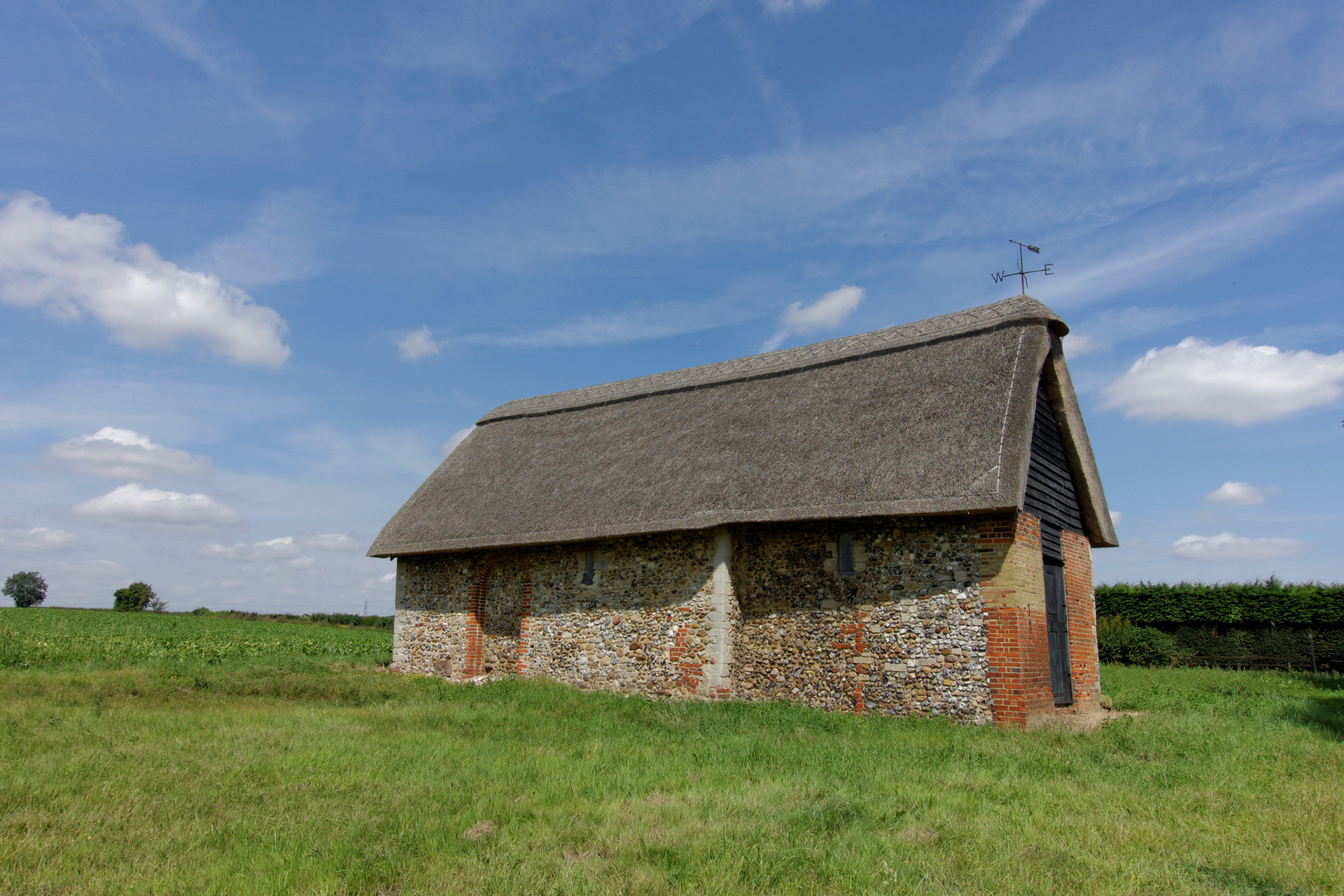
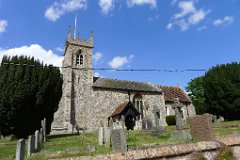
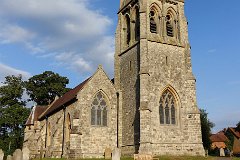
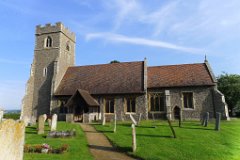
Wicken Bonhunt - St Helen's Chapel
A Saxon chapel built in the 10th century, constructed of small flint and pebble with stone quoins under a thatched roof. A major middle Saxon settlement was found near the chapel during excavations in the early 1970s, during construction of the M11. It showed signs of late Bronze Age, Saxon as well as Norman activity and included a burial ground around Chapel of St Helen containing over 200 human remains.The most prominent Saxon features are the slight thickness of the walls, the sloping jambs of the windows and the large stones at the bases of all the quoins. The one Norman feature present, the base of the window in the north wall of the chapel, was thought to have been added subsequently.