






83 / 94
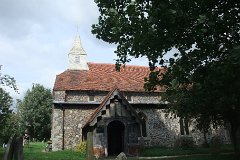
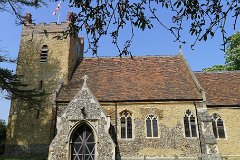
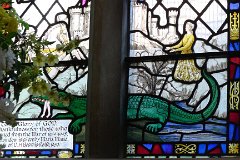
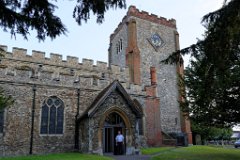
Witham - St Nicholas - Montage
During the 1877 restoration work, a stained glass enthusiast noted that the internal walls were "coloured a deep red, diapered with flaming stars in black".
The alabaster figures represent John and Elizabeth Southcote. John Southcote was a judge during the reign of Elizabeth I. In the early years of Elitabeth's reign her attitude to Catholics was fairly relaxed, and so long as they were loyal to her, they were free to believe what they wished. Although the saying of mass had been punishable by death since 1559, Elizabeth had ensured this penalty was not implemented.
However in 1570 Pope Pius V released a Papal Bull excommunicating Elizabeth and absolving her subjects from allegience to her and her laws. This caused much concern in England. Catholics came to be seen as a threat to the Crown. Many plots against the Queen were discovered and Catholicism became tantamout to treason. The death penalty was no longer theoretical.
John Southcote was judge at one such trial of a Catholic priest where the only possibe outcome was the death penalty. Rather than condemn the priest to death, he stood up, threw off his judge's robes and then and there, resigned his post. He died a few years later, in Witham and is memorialised wearing the robes he so dramatically removed in court.
