

23 / 125
Latton Priory
The Augustinian priory of St John the Baptist was founded in the 12th century, and the Priory Church stood at the northern corner of a moated island about 80 yards square. The church was completely rebuilt in the 14th century using flint rubble dressed with reused Roman brick and Reigate stone. In 1536 the priory was dissolved, eventually passing to the Mark Hall estate in the 1550s.
The church was part of a square of cloistered buildings for the Augustinian order, including a dormitory to the south, a cellarium to the east and refectory to the south (where the farmhouse now stands). Fishponds to the south of the moat helped to feed the monks, particularly in the leaner winter months.
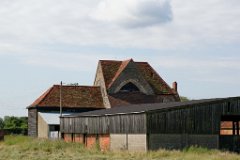
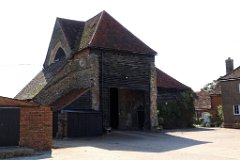
The original building included a three-stage tower with pyramidal roof, but by the late 18th century only the chancel, crossing, transepts, and east end of the nave remained, with the building used as a barn. Now all that survives, still incorporated in a barn, is the crossing and fragments of the abutting transepts and nave.
