31 / 82
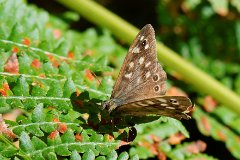
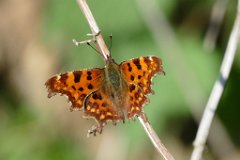
Comma - Polygonia c-album
A common sight nowadays - the Comma butterfly - seen today on a walk in the Essex countryside. The Comma was once widespread over the British Isles, but in the 1800s suffered a severe reduction in numbers, and survived only in a few Welsh border counties.
If this had happened today, every eco-warrior would be talking about climate change and how we should treble the price of electricity so we didn't destroy lovely little butterflies like the Comma.
Turns out the Comma was in decline due to a reduction in Hop farming, a key larval foodplant at the time. The environment it depended on wasn't "wild", it was man-made, like so many habitats various species exploit. Since the 1960s this butterfly has made a spectacular comeback, with a preference for Common Nettle as the larval foodplant, and it is now found throughout England, Wales, the Isle of Man, Channel Islands and has recently reached Scotland. Despite all the doom and gloom prophecies, nature has a way of adapting and surviving.
