






67 / 112
North Weald - St Andrew
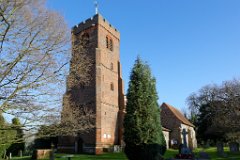
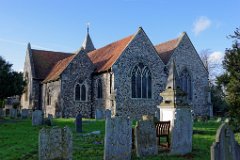
The oldest parts of St Andrews Church, the nave, aisle and lady chapel, date from around 1330 and are built of flint rubble, brick, and limestone. The red-brick Tudor tower is entirely of brick and is unusually high, in four stages with an embattled parapet resting on a corbel table of small segmental arches.
The church suffered a major fire in January 1964 which destroyed much of the interior of the building. The subsequent restoration retained many original features including the 14th century windows and piscina.
The churchyard contains a small military graveyard for members of the RAF and the Essex Regiment.The Church has close links with North Weald airfield, which was one of the most active airfields during the Battle of Britain and a base for Hawker Hurricanes and Bristol Blenheim night fighters. The airfield was bombed repeatedly during the Battle of Britain and 39 aircrew were killed, but the airfield was never put out of action.
In 1940, two American Eagle Squadrons moved into North Weald supplied with Spitfires. A couple of years later, Norwegian squadrons were re-assigned to the airfield. More than 50 squadrons from 7 nations were stationed at RAF North Weald and the last, 111 Squadron of the Royal Air Force, left North Weald in February 1958. 111 squadron formed the RAF aerobatics team "The Black Arrows", which evolved into the Red Arrows.
The Standard of 56 Squadron hangs inside the church.
