



84 / 146
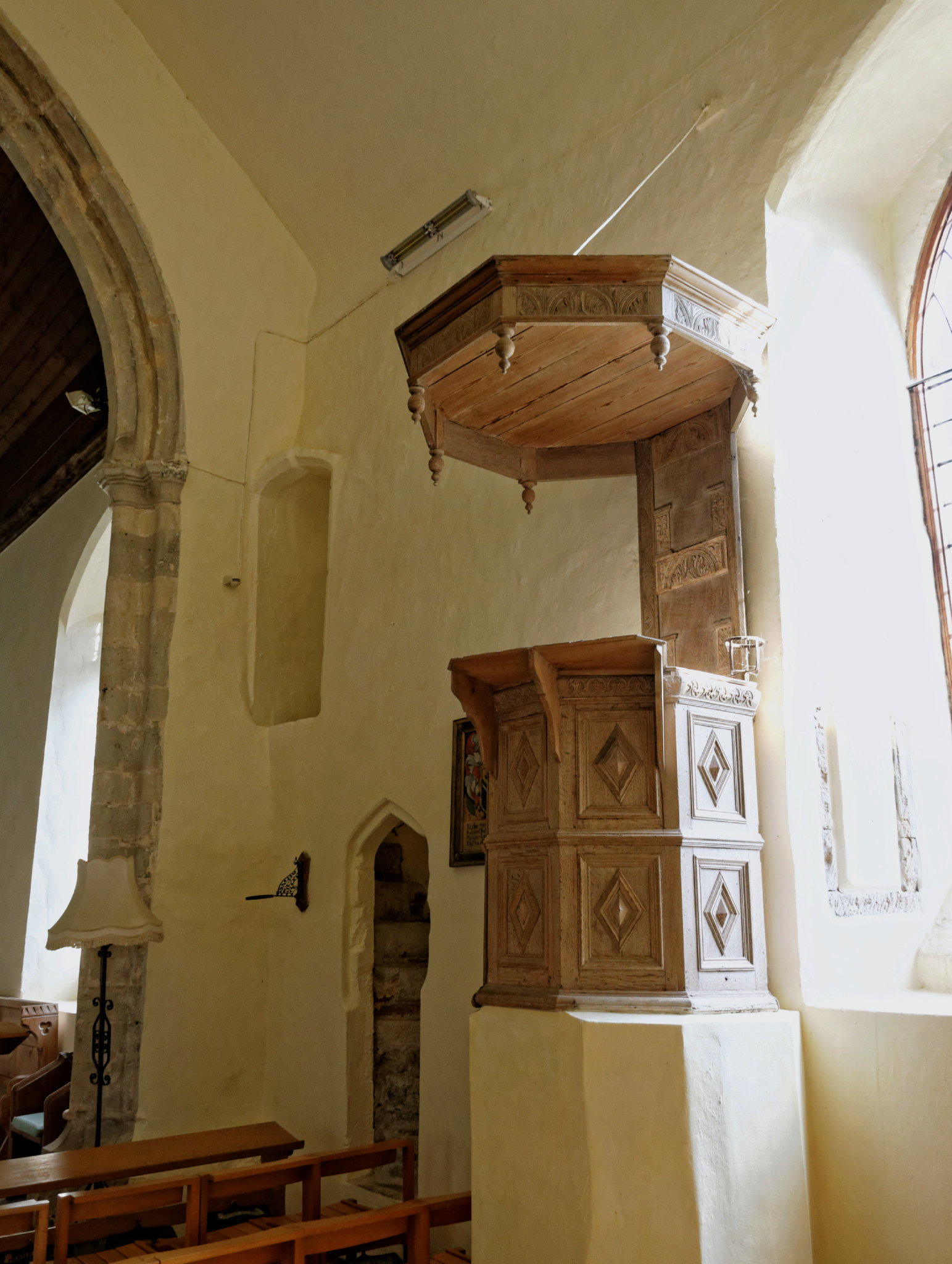
East Mersea - St Edmund: Pulpit
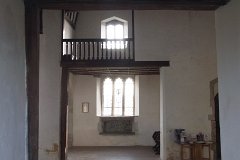
Internally much of the original interior of the church was destroyed by parliamentarian troops during the Civil war when they used the church as a barracks and stables. The lime-washed austerity of the post-Reformation years is still apparent, and the church has a simple devotional feel to it. Mounted high on a stone base on the south wall, the 17th Jacobean Pulpit and octagaonal sounding board ('tester') now has no visible means of access, after the box pews were removed in the 1920s.
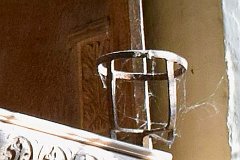
The pulpit is equipped with a simple wrought-iron hour-glass stand. In the the 17th century, the hour-glass was used to time to length of the sermon. Having a "second glass" was a sign of a preacher who had got carried away. There is also symbolism in its use: as the sands of time ran through the glass, the flock were reminded of their own time running out before their inevitable demise and Judgement..